The following is cited from the news:https://news.ltn.com.tw/news/life/breakingnews/5263627
To prevent battery explosions, power banks and similar devices are prohibited from being checked in as luggage and must be carried in person when traveling by air. This makes it crucial to ensure that any compromised battery will not explode.
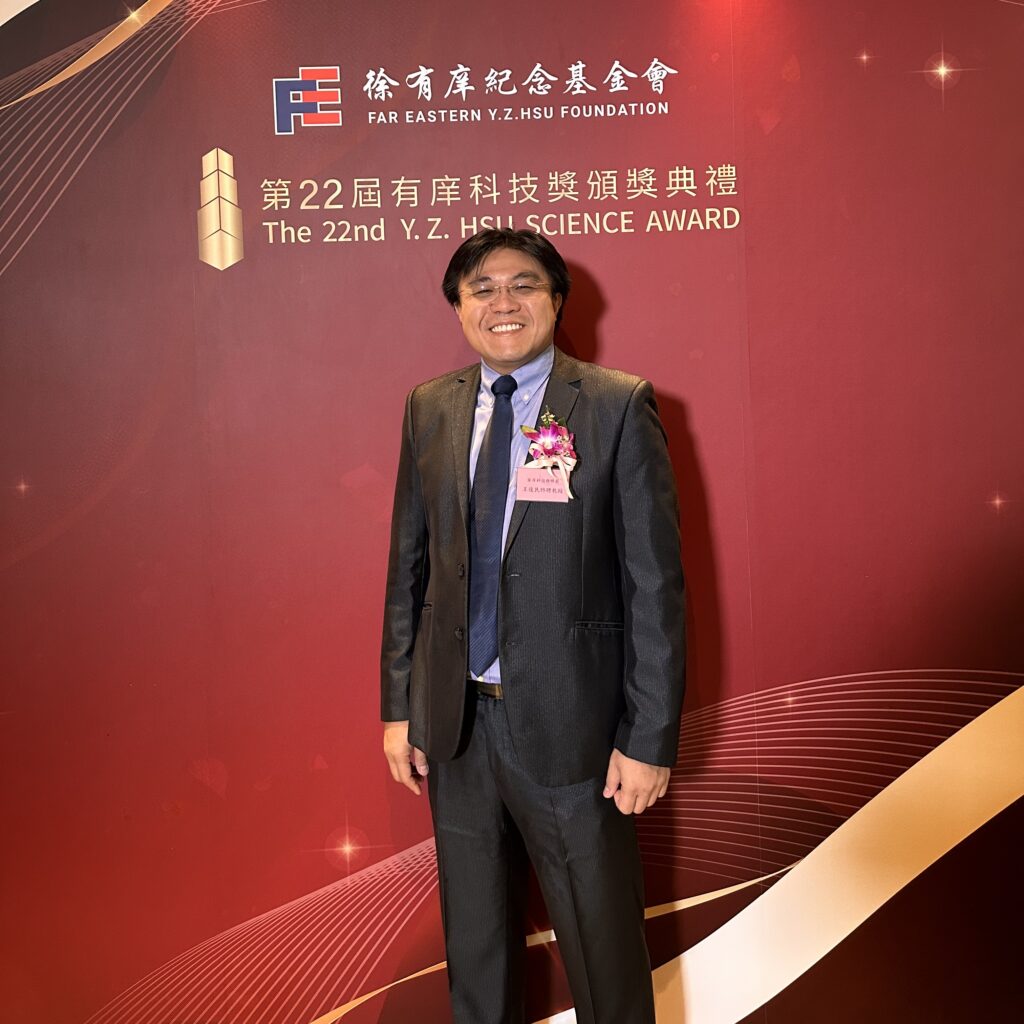
Professor Fu-Ming Wang of the Graduate Institute of Applied Science and Technology at National Taiwan University of Science and Technology (NTUST) has long focused on the issues of lithium battery safety and longevity. He led his team in a collaboration with a leading domestic electric scooter manufacturer, utilizing innovative battery safety technology and advanced polymer material design to redefine the safety standards for green energy storage. Their work was recognized with the prestigious “Y.Z. Hsu Green Technology Innovation Award” and the “2025 International Competition on Net Zero Emission Technology.”
Professor Wang Fu-Ming stated that his team has analyzed data from millions of batteries and currently found no safety concerns. This achievement makes Taiwan one of the few countries globally capable of performing “Million-Level Battery Safety Monitoring,” setting a new benchmark for industry-academia collaboration.
Professor Wang believes that Taiwan’s competitive edge lies in “precision and safety.” He plans to continue expanding the technology’s application to fields such as drones, submarines, and wearable devices. The team is also researching self-powered wearables and biosensors, with the aim of creating smart devices that can “generate their own power while monitoring health.”
Professor Wang Fu-Ming explained that the team’s research achievements have already been applied to the monitoring systems of domestic shared battery operators. By utilizing Big Data and electrochemical measurement technology, they collaborated with a leading Taiwanese electric scooter manufacturer to establish the country’s first-of-its-kind “Battery Health Monitoring and Early Warning Platform.” This platform is capable of issuing warnings before an abnormal temperature rise or a sudden increase in electrical resistance, allowing batteries to “last longer and be used with peace of mind.” Professor Wang expressed the hope that when a battery encounters an issue, it will not explode, but rather “quietly pass away.”
Professor Wang pointed out that the system performs large-scale data analysis to track the battery’s health status under various parameters, including charging and discharging cycles, voltage, and impedance changes. It then combines this data with statistical models to predict anomalies. The core of the research lies in “how to enable the safe release of energy rather than an explosive reaction.” The key technologies integrate polymer electrolyte design with thermal management control. The team validated the technology within the battery networks of domestic electric scooter brands, incorporating features such as random sampling inspection, in-service health adjustment, and short-circuit prediction algorithms to enable the system to automatically adjust charging and discharging strategies and prevent accidents ahead of time.
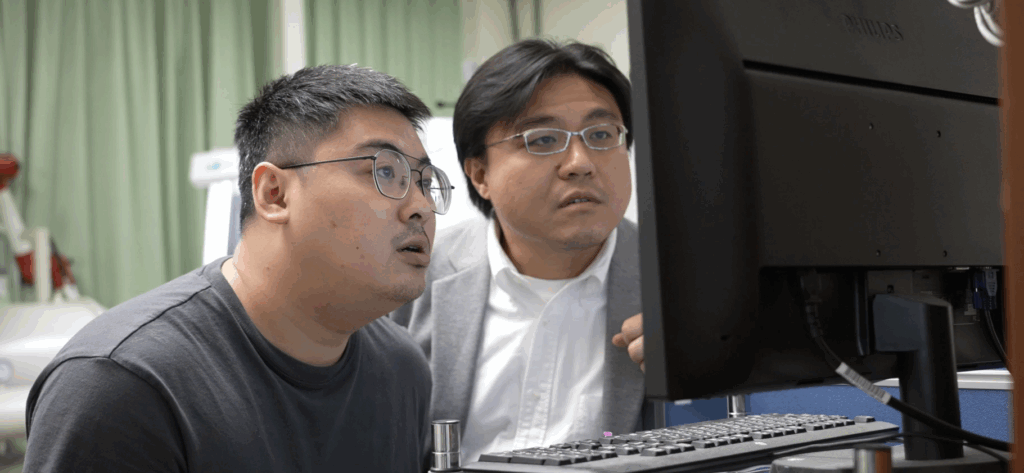
Professor Wang emphasized that the greatest value of industry-academia collaboration lies in two-way learning: the academic side gains real-world environmental data, while the industry side enhances product safety and lifespan. This collaboration also allows NTUST students to directly participate in practical projects, translating electrochemical theory into engineering applications.